“Coffee Industry upgrading” search results (300)

Coffee consumption has entered the era of subdivision: talk about the profit of diffuse coffee
In the quick coffee consumption bombarded by famous coffee chains such as Starbucks, Pacific Ocean and COSTA, the coffee brand founded by Koreans seems to be looking for another way to survive, a slow life and soft competitiveness dominated by environment and user experience.
2014-05-28 Coffee News Coffee Profits Coffee Consumption
Common sense of Yunnan Pu'er Coffee Coffee abroad
After years of accumulation and development, the quality of Yunnan coffee has quietly risen in the international market, and has become the high-quality coffee favored by the international market after Blue Mountain Coffee. In the eyes of ordinary coffee lovers, the protagonist of the Starbucks marriage with Starbucks is not widely known, but it is understood that Aixing Group is a rapid black in Yunnan coffee industry.
2015-04-24 Foreign countries Yunnan Pu'er coffee common sense
The Coffee complex of Yunnan Pu'er Coffee Love Group
After years of accumulation and development, the quality of Yunnan coffee has quietly risen in the international market, and has become the high-quality coffee favored by the international market after Blue Mountain Coffee. In the eyes of ordinary coffee lovers, the protagonist of the Starbucks marriage with Starbucks is not widely known, but it is understood that Aixing Group is a rapid black in Yunnan coffee industry.
2015-02-10 Yunnan Pu'er coffee love group complex past years accumulation development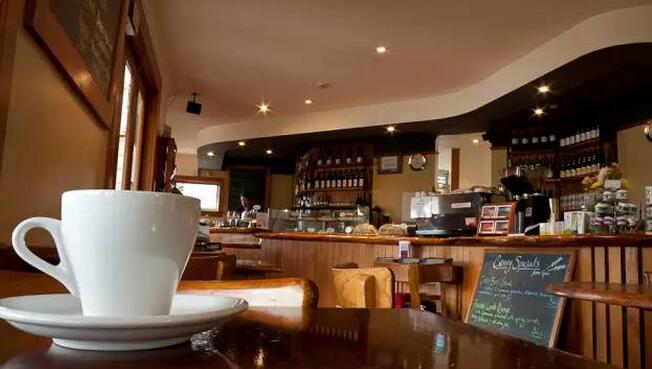
The coffee industry has entered a strange circle: why is it so difficult to run a coffee shop successfully?
The whole coffee industry seems to have entered a strange circle, opening a coffee shop at 50 times the cost of opening a Spicy Hot Pot shop, and the final profit is likely to be 50 times that of a Spicy Hot Pot shop, and in many cases less than 50 times as much. The above sentence seems to be a bit of an exaggeration, but for entrepreneurs, it is indeed a naked truth. A lot of people have
2015-11-06 Coffee enter strange circle success management one cafe why so the whole
An introduction to the characteristics of the manor producing area with a rich taste of Rwanda boutique coffee
Rwandans have been growing coffee since colonial times, but until 1999, its products were still classified as below Class C and were not popular in the global market. The reason for the poor quality is that farmers do not have a fixed procedure for washing coffee beans and do not process coffee fruits according to specifications in time. Buyers buy coffee beans at $0.33 per kilogram, and farmers keep warm by the meagre profits earned at low prices.
2016-09-07 Taste embellishment rich Rwanda boutique coffee flavor taste manor producing area
Can coffee chain giant Starbucks continue to dominate the world in the future?
In the 1960s, some large coffee producers in the United States demoted magical coffee drinks into mundane things with large-scale production, and nearly lost their lives in order to continue to reduce costs and reduce the quality of their products. Fortunately, a beautiful mermaid siren banshee sings a moving song in the chaotic downturn of the coffee industry.
2015-07-13 Chain coffee giant Buck the future continue to dominate the world last century 60 years
Rwanda coffee beans flavor taste estate production area introduction Malaba coffee boutique coffee beans introduction
The first problem that Malaba coffee farmers solved was to set up a washing station. Coffee cherries must be transported to a washing station within twelve hours of picking to remove the sugar coating under the outer skin of the coffee beans, otherwise the flavor of the coffee will be greatly damaged. In July 2001, the Rwandan government, through UNR, the Office des Cultures Industrielles du Rwanda (OCIR-Caf), ACD,
2016-07-21 rwanda coffee beans flavor taste estate appellation presentation maraba laba
In 11 years, this curry has knocked on 300 billion coffee beans market.
The rapid development of coffee restaurants shows great signs of developing into a new direction of leisure catering industry. But new restaurants open every day, and many restaurants fall down quickly. The flower house first put forward the concept of curry restaurant in Beijing. Since its establishment more than ten years ago, while speeding up the expansion of the main brand, it will also launch the second and third sub-brands one after another. Always adapt to and promote the market with the strategic vision of development.
2016-10-21 11 years time this curry opened 300 billion coffee beans market big
Rwanda Coffee Origin Rwanda Coffee Taste
Rwandans have been growing coffee since colonial times, but until 1999, its products were still classified as below Class C and were not popular in the global market. The reason for the poor quality is that farmers do not have a fixed procedure for washing coffee beans and do not process coffee fruits according to specifications in time. Buyers buy coffee beans at $0.33 per kilogram, and farmers keep warm by the meagre profits earned at low prices.
2016-05-29 Rwanda Coffee Origin Taste Human colonization Times from Open
Challenge Starbucks, small coffee can make a big difference.
With the increasing prosperity of our economy, cafes are springing up like bamboo shoots after a spring rain. There are all kinds of coffee shops in the CBD business district, office district and even the streets of residential areas in first-tier cities.
2014-05-26 Coffee news coffee knowledge coffee encyclopedia
The way of thinking of diffuse coffee
Two years ago, Man Coffee opened its first store in Beijing, and then as stores opened everywhere, it seemed to be a hit. "We have opened a total of 36 stores so far, and these stores have been profitable so far." Xin Zixiang, president of Man Coffee, told Nandu reporter.
2014-05-29 Coffee shop management coffee shop management
50% of the coffee shops don't make money by selling coffee.
A few days ago, a "profiteering door" news that the price of Starbucks coffee in the Chinese market is fully higher than that in the United States, causing widespread debate in the society.
2014-07-11 Coffee news coffee shop operation coffee profit
The source of washed coffee from Rwanda
Rwandans have been growing coffee since colonial times, but until 1999, its products were still classified as below Class C and were not popular in the global market. The reason for the poor quality is that farmers do not have a fixed procedure for washing coffee beans and do not process coffee fruits according to specifications in time. Buyers buy coffee beans at $0.33 per kilogram, and farmers keep warm by the meagre profits earned at low prices.
2016-05-24 Water washing coffee Rwanda source people since colonization times from open
Introduction to the flavor and taste of Rwanda boutique coffee beans with aroma and acidity
In 2000, the Mayor of Malaba requested development assistance from the National University of Rwanda (UNR), which is located near the city of Butare, and the following year, the National University of Rwanda assisted in the establishment of the Joint strengthening Rwanda Agricultural Partnership (PEARL). PEARL is also supported by several organizations: the United States Agency for International Development (USAID), Michigan State University, Texas A & M University, and
2016-08-09 Aroma acidity Rwanda boutique coffee beans flavor taste manor producing area special
The Origin of Rwandan Coffee Flavor Flavor Manor introduction to the Chilmel Manor in the Lute Xilo region of the Western Province
Rwandans have been growing coffee since colonial times, but until 1999, its products were still classified as below Class C and were not popular in the global market. The reason for the poor quality is that farmers do not have a fixed procedure for washing coffee beans and do not process coffee fruits according to specifications in time. Buyers buy coffee beans at $0.33 per kilogram, and farmers keep warm by the meagre profits earned at low prices.
2016-06-24 Rwanda Coffee Origin Flavor producing area Manor introduction Western Province Texi Mai
Small coffee is a big challenge to Starbucks.
With the increasing prosperity of our economy, cafes are springing up like bamboo shoots after a spring rain. There are all kinds of coffee shops in the CBD business district, office district and even the streets of residential areas in first-tier cities. The coffee industry is accelerating into a stage of high prosperity, so the practitioners of the coffee industry are facing unprecedented pressure and challenges. Starbucks in an absolutely strong situation, its
2015-05-20 Coffee big as challenge Buck.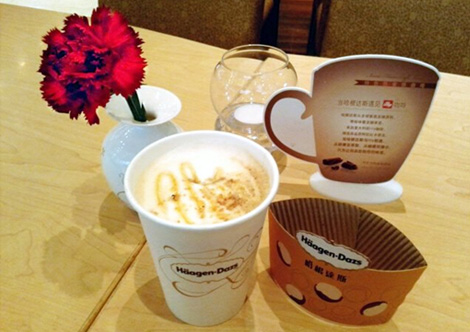
How long can coffee and brand cross-border mash-up "golden oil" be popular?
Haagen-Dazs sells coffee, McDonald's and KFC are targeting coffee, and Guuci and Hermes have all opened cafes. It seems that coffee has become a panacea for cross-border mash-ups. Through cross-border cooperation, unrelated and non-competitive brands can infiltrate each other and target consumer groups can be integrated, so as to enhance the comprehensive competitiveness of brands. Haagen-Dazs catering in Shanghai
2015-06-10 Coffee brand cross-border mash-up one-size-fits-all oil in the end how long?
Coffee giant Starbucks' O2O practice and its inspiration
Starbucks O2O practice course-Starbucks is one of the earliest traditional catering enterprises to touch the Internet:? Establish an online community to provide online services for offline services; Popularize the free Internet in stores to attract a large number of offline consumers: position yourself as the customer's third space besides the workplace and home; Using social networks, Starbucks brand image is deeply imprinted into the consciousness of young people.
2014-07-16 Coffee News Starbucks 020 practice inspiration
Introduction to the treatment methods of fine Rwandan coffee beans
Rwandans have been growing coffee since colonial times, but until 1999, its products were still classified as below Class C and were not popular in the global market. The reason for the poor quality is that farmers do not have a fixed procedure for washing coffee beans and do not process coffee fruits according to specifications in time. Buyers buy coffee beans at $0.33 per kilogram, and farmers keep warm by the meagre profits earned at low prices.
2016-06-23 Boutique Rwanda coffee beans handling methods introduction people from
Introduction to Fine Coffee from Rwanda Malaba Coffee
In 2000, the Mayor of Malaba requested development assistance from the National University of Rwanda (UNR), which is located near the city of Butare, and the following year, the National University of Rwanda assisted in the establishment of the Joint strengthening Rwanda Agricultural Partnership (PEARL). PEARL is also supported by several organizations: the United States Agency for International Development (USAID), Michigan State University, Texas A & M University, and
2016-07-01 Rwanda Malaba Rabbah coffee flavor taste characteristics introduction boutique 2